How to Choose a Luxury Villa Architect in Pune
How to Choose a Luxury Villa Architect in Pune
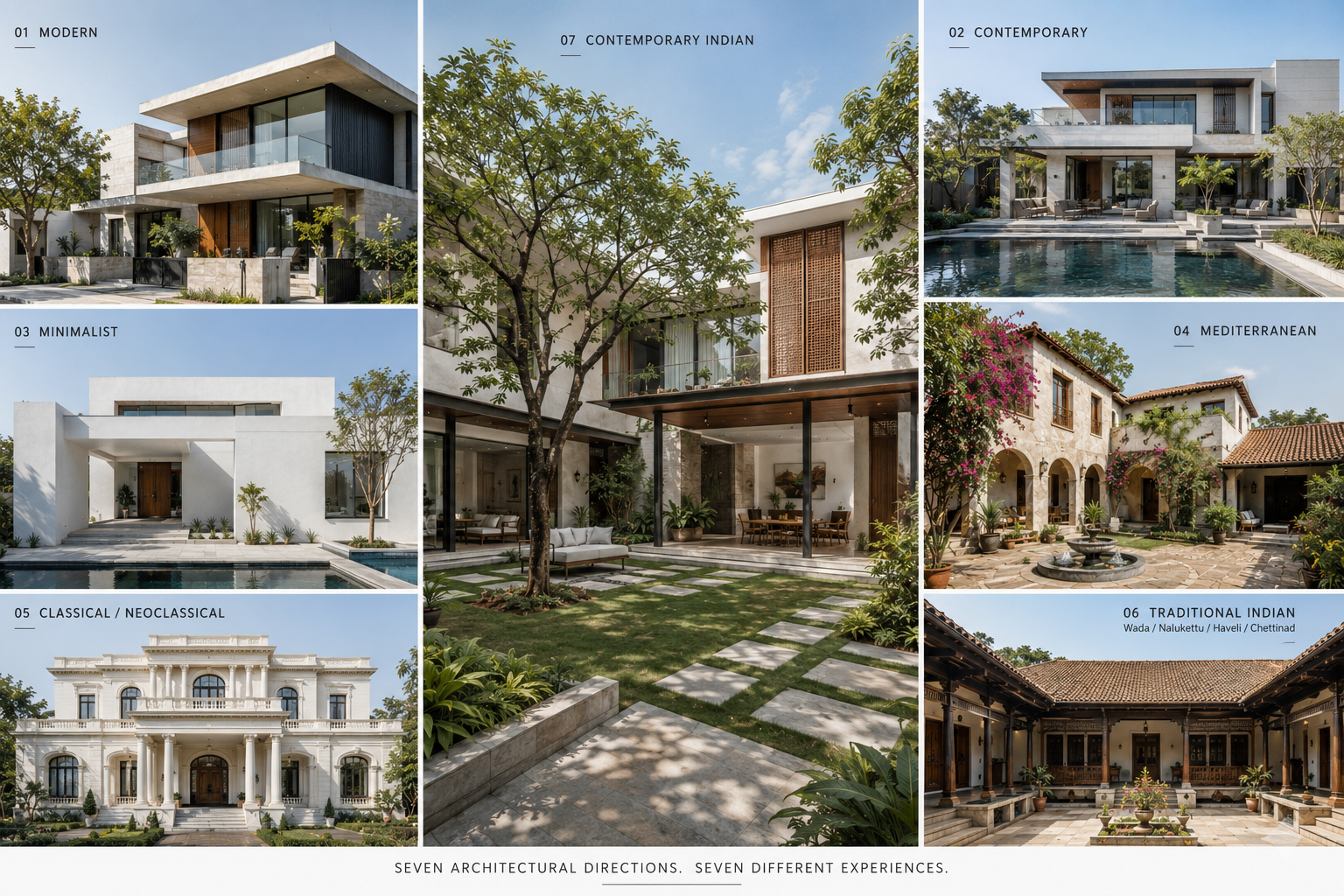
A luxury villa is not simply a larger house. Its quality comes from how intelligently the site, architecture, landscape, interiors and technology are brought together.
For a high-value private residence, choosing the right architect is therefore less about selecting a style and more about finding someone who can hold the entire project together.
What Makes a Luxury Villa Different?
Size alone does not create luxury.
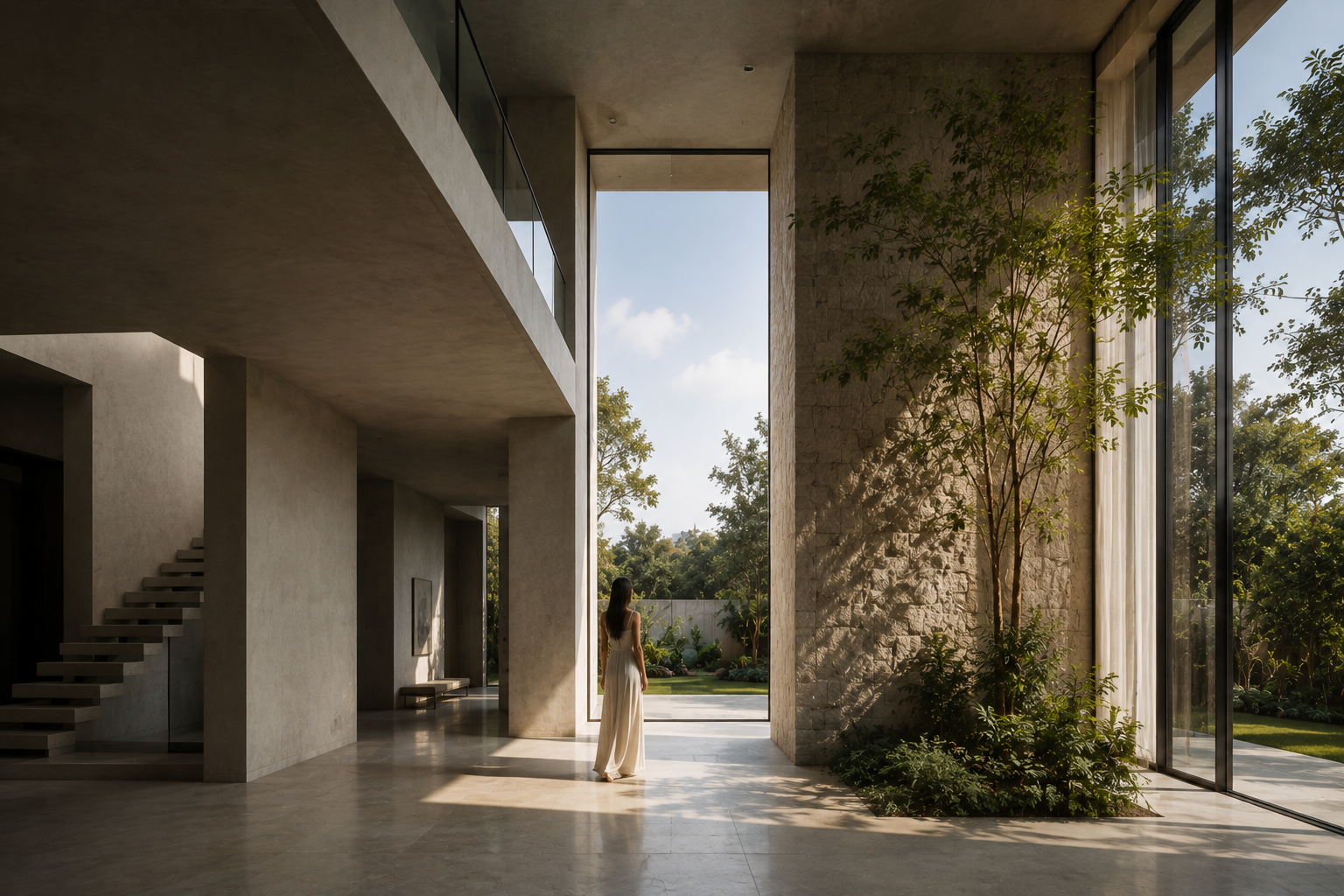
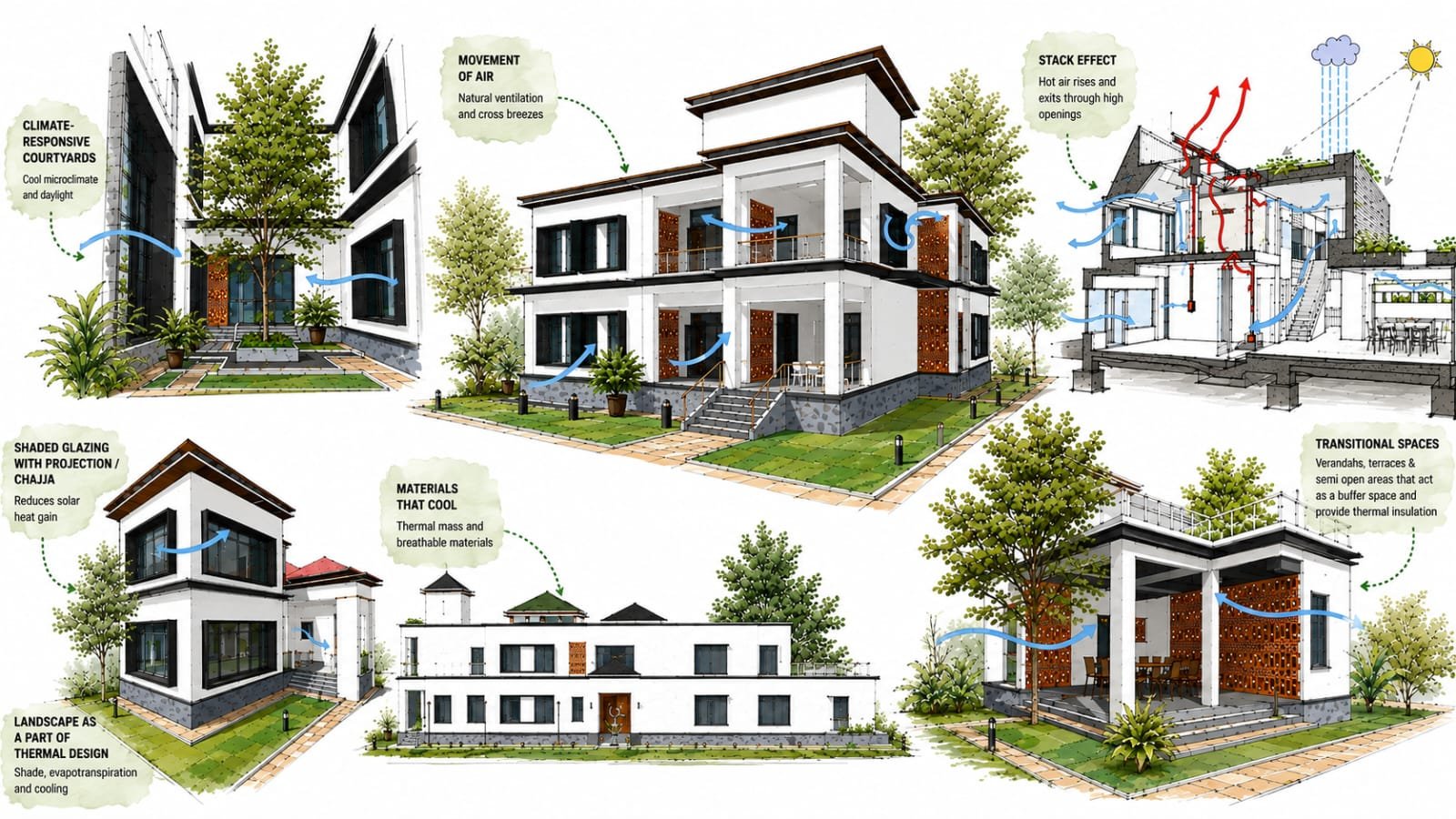
A well-designed villa responds to its site, climate, privacy, landscape and the way the family actually lives. In Pune and its surrounding regions, that means understanding strong summer sun, the south-west monsoon, sloping terrain on many larger plots and the relationship between built and open space.
The best villas make these decisions feel effortless.
Privacy is resolved through planning rather than simply compound walls. Outdoor spaces remain usable beyond one season. Materials are selected not only for how they look on handover day, but for how they will age. Services such as HVAC, automation, security and water systems are integrated without overwhelming the architecture.
Luxury is not about making a house look expensive. It is about making every important decision feel right.
What Should a Luxury Villa Architect Actually Handle?
The work begins before the first drawing.
A serious architect studies the orientation, topography, access, views, vegetation, regulations and surrounding context before deciding where and how the villa should sit on the land.
The client's lifestyle then becomes the architectural brief — how the family entertains, where privacy is needed, how guests and staff move, how different generations use the house and how the residence may need to adapt over time. Where Vastu matters to the family, it enters the design at this stage — at orientation and planning, where it is entirely workable, rather than as a correction later.
The architect then brings together:
- Spatial planning and architectural character
- Climate response and natural light
- Landscape and indoor–outdoor relationships
- Structural and MEP coordination
- Lighting and automation
- Materials and detailing
- Budget and design decisions
- Construction-stage review
This coordination is particularly important in a luxury villa because the architecture, landscape, interiors and engineering are deeply interconnected.
How Do You Choose the Right Architect?
Look beyond attractive renders.
Ask whether the architect has completed villas comparable to yours, not simply residential experience in general.
Ask how they would approach your specific site before showing you a design.
Ask who coordinates the structural, MEP, landscape, lighting and technology consultants.
Ask when the budget enters the design process and how it is monitored as the project develops.
Ask who will actually lead your project and how involved the architect remains during construction.
Most importantly, ask the architect to explain why a previous villa was designed the way it was.
A specialist should be able to discuss the relationship between site, climate, family, planning, materials and cost. A presentation can show style; the conversation reveals expertise.
Architect, Interior Designer or Turnkey Contractor?
These roles are often confused.
An architect establishes the relationship between the site and building, spatial planning, architectural character, façade and overall design intent.
An interior designer develops the experience within that architectural framework.
A turnkey contractor may combine design and construction under one contract, offering convenience but reducing the separation between design authority and execution — which means no independent professional is checking the builder's work against the design.
For a bespoke villa, an integrated team can work exceptionally well. What matters is that someone remains responsible for the architectural whole and protects the design through construction.
Why Integration Matters
A villa is not a building to which landscape, interiors and technology are added one after another.
Landscape affects shade. Shade affects glazing and cooling. Pool levels affect drainage. Automation requires infrastructure before construction is complete. Lighting depends on architectural and ceiling decisions.
When these are designed independently, the house can feel assembled.
When they are considered together, the result feels natural.
Integration is not an additional feature of luxury villa architecture. It is the discipline itself.
Rajmudra Architects
Rajmudra Architects, Pune, founded in 2011, is led by Ar. Nitin Markad, Principal Architect. The practice has a focused practice in private homes, with work including luxury villas, premium bungalows, farmhouses, boutique resorts and other bespoke residences. Architecture, landscape and interiors are approached as connected parts of the same design process.
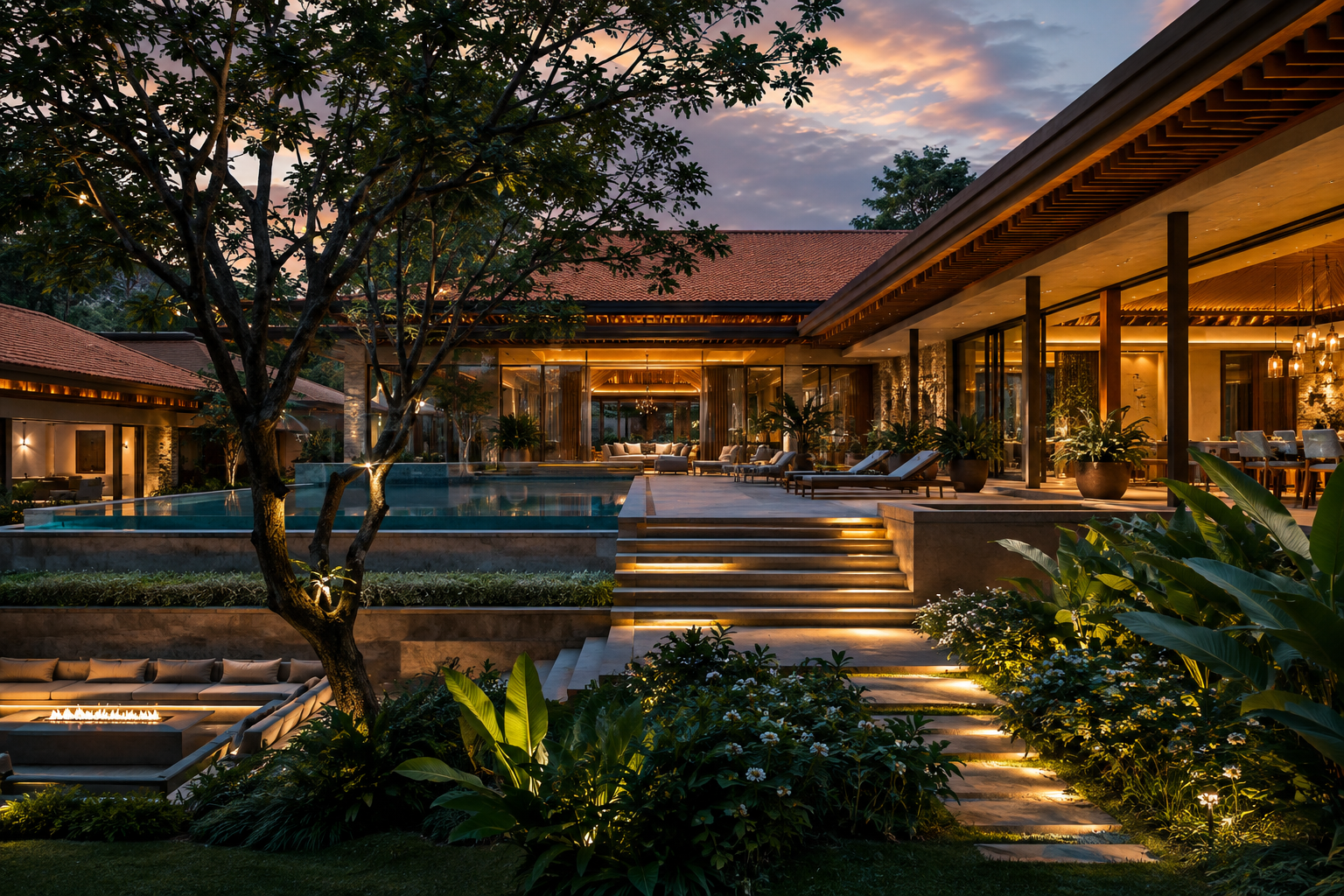
At Thorat Villa in Karjat, Ahilyanagar, a 30,000 sq.ft luxury villa on a one-acre site, the architecture is organised around a strong relationship between the house and garden. Deep terracotta roofs, generous overhangs and full-height glazing create shaded transitions between the interiors, pool terrace and landscape, making the garden an integral part of the architectural experience.
At Courtyard House in Kashti, Ahilyanagar, a 5,000 sq.ft residence is planned around a planted central court. Shaded verandahs, jali screens, terracotta roofs and carefully positioned openings create privacy while supporting cross-ventilation and filtered natural light.
These projects reflect the practice's approach: respond to the site, understand the way the family lives, and allow architecture and landscape to develop as one composition.
The intention is straightforward: to create residences that feel considered rather than decorated, and distinctive without becoming dated.
Seven Questions to Take to the First Meeting
- Which of your completed villas or farmhouses is most relevant to my site and brief — and can I see it or speak to the client?
- How would you approach my land before any design exists?
- Which consultants will this project need, and who coordinates them?
- When do we first discuss budget, and how is it tracked against design decisions?
- What is your role during construction — visits, approvals, authority?
- Who in your office, by name, leads my project day to day?
- Why was one of your previous villas designed the way it was?
There is no single perfect answer to all seven. Listen for specificity, candour about cost, and evidence that the architect thinks about the project as a whole.
The Question Worth Asking
Instead of asking:
“Can you design a luxury villa?”
ask:
“How would you approach my site, my family's way of living and the life this house needs to support for the next twenty years?”
The quality of that conversation will tell you far more than a brochure.
For a luxury villa, farmhouse or bespoke private residence in Pune and the surrounding region, Ar. Nitin Markad and Rajmudra Architects work with clients from the early site and brief stage through architectural design and execution.
Luxury is not about making a house look expensive. It is about making every important decision feel right.